
This essay’s TL;DR ? Don’t get too caught up in the current “this time it’s different” hype cycle. Focus on the basics and what is immutable.
“EVERYTHING IS CHANGING. NEW NEW THING WILL NOW REPLACE THE OLD NEW THING!”
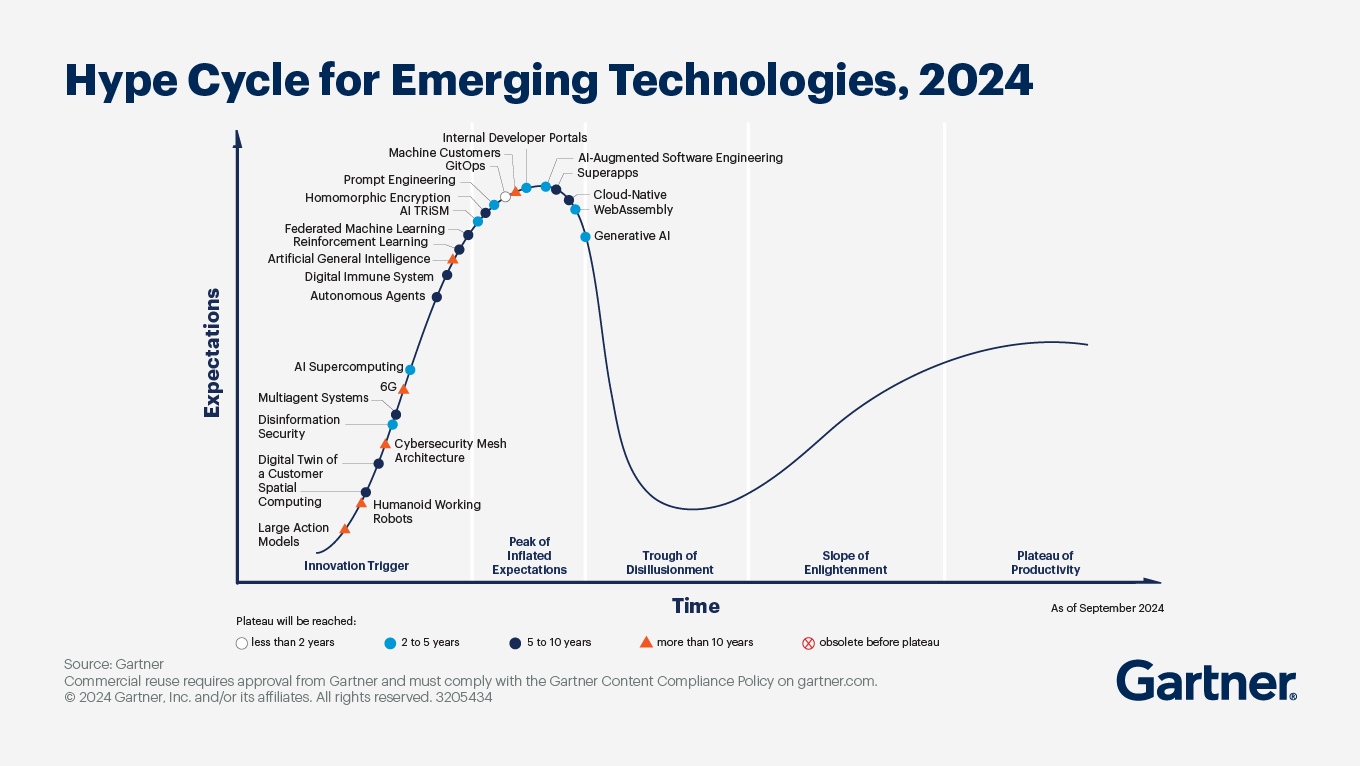
Currently the zeitgiest is all about and around AI hot takes. Earlier it was Blockchain and Robotics/RPA. Before that NFT and Web3. Before that AR/VR/XR and so on. It perennially feels like the headline earlier has invisible exclamation marks. This seems to be the undertone in and of all media we consume. This happens regardless of source, type, or format.
“Everything is changing! Nothing will stay the same!! Be Nervous!!”

Most media entities and business firms that are vested in change are hellbent on convincing the rest of us that everything is changing and fast and if we don’t change and fast, we will be left behind. The goal of media this century is to make every problem your problem. Both at work and away from it. This is exhausting. Humans have ‘status quo bias‘ and this relentless barrage grates against that. But it has begun to dawn on me that this message is grating BUT bogus. It’s a Lie with a capital L.
William Gibson coined the term “Cyberspace” and later popularized the concept in his novel Neuromancer. He has an awesome quote attributed to him wayyy back in 1993: “The future is already here — it’s just not very evenly distributed”.
Gibson as always was precient. While Change is a constant, sure, it is never ever evenly distributed. Everything #Hot and #New is not destined for world domination, inspite of breathless non-stop press assuring us it so IS.
So now I have my own framework to better understand change and reclaim a sense of calm in the eye of the relentless barrage.
The 5-35-60 Rule of Change.
In a nutshell : At any given moment something that has gained attention and traction is likely
[a] going to peter off at 5% adoption – if it is a worthy but incremental improvement over the status quo
[b] going to top off at 35% – if it is a vast improvement over the status quo
[c] peak at 60% penetration – if it is a 10x improvement and much cheaper then current alternatives.
Corollary : The initial 5% will feel rapid and feed the headlines. The next 30% will be slow but feel fast. The last 25% (to reach 60% saturation) will feel glacial in pace.
Want examples ? Here are things that roughly fit this framework out in the real world:
- Online eSales (Amazon currently has about 40% of U.S. e-commerce market share. Not even 50%. Amazon ha sbeen at it for 30 years now. Bet you thought it was 80%+)
- The rise of smartphones (over 2 decades the number of people that own a smartphone is ~4.88 Billion, making up ~61% of the world’s population)
- Online MOOCs vs traditonal college education (under 5% peneration)
- Netflix vs Cable TV as a % of TV Consumption (4 people in a room of 100 people have Netflix, globally have a Netflix Account)
- Lastly, no one will deny AIR TRAVEL has been one of this last century’s miracle esp after it became addordable. So guess how much % of the world population has flown in an aircraft ONCE at least in their life ? .. You ready ? 5%
Nothing is going to go on a smooth upward path from 0 to 100% adoption. No matter how much fawning press it gets and however much the consultants and industry hacks try and convince you otherwise in their slick decks.
Jeff Bezos has a mature take on change. In an interview long ago he said “I very frequently get the question: ‘What’s going to change in the next 10 years?’ And that is a very interesting question; it’s a very common one. I almost never get the question: ‘What’s not going to change in the next 10 years?’ And I submit to you that that second question is actually the more important of the two — because you can build a business strategy around the things that are stable in time. … [I]n our retail business, we know that customers want low prices, and I know that’s going to be true 10 years from now. They want fast delivery; they want vast selection. It’s impossible to imagine a future 10 years from now where a customer comes up and says, ‘Jeff I love Amazon; I just wish the prices were a little higher,’ [or] ‘I love Amazon; I just wish you’d deliver a little more slowly.’ Impossible. And so the effort we put into those things, spinning those things up, we know the energy we put into it today will still be paying off dividends for our customers 10 years from now. When you have something that you know is true, even over the long term, you can afford to put a lot of energy into it.”
In this breathless news saturated ADHD world we feel like any new phenomenon/tech is going to get adopted by 100% of the market we operate in by the end of the year. But to get to Gibsons ‘Evenly Distributed’ end state takes herculean effort, flawless execution and a tremendous amount of time. And this only if the new new thing is much cheaper and 10 times better. Else things peter out much earlier (at 5%, at 35%). Even the oh-so obvious improvements. Red Queen Effect is a thing too. The system pushes back. If history is any guide a black swan event will much more likely dispurt your planning versus this new new thing everyone is raving about.
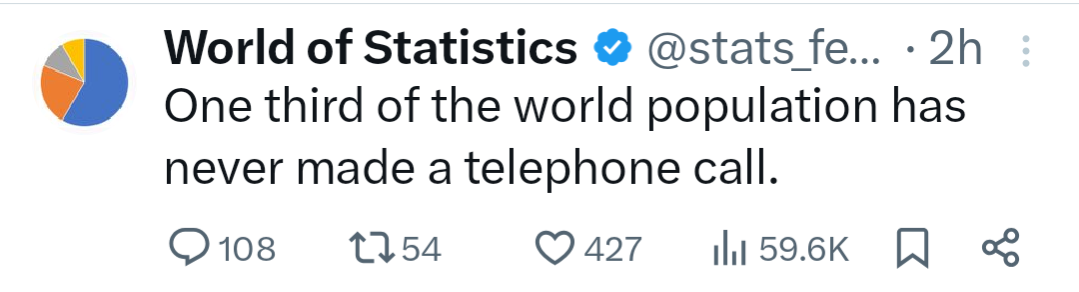
Things that never change are the most important things to pay attention to. Change gets most of the attention, because it’s exciting and surprising. But things that stay the same – how people behave, how they think, how they’re persuaded – is the real meat of history. the legendary historian Will Durant said it best and long ago : “People spend too much time on the last 24 hours and not enough time on the last 6000 years.”

 Third Eye Observations